AI Medical Tools 2026: Dragon Medical One vs UpToDate — Faster Documentation, Better Decisions
Updated June 2026 · Reading time: ~7 min
Doctors spend an average of 2 hours on EHR documentation for every 1 hour of patient care. Two AI tools address this from different angles: Dragon Medical One eliminates typing from documentation, and UpToDate ensures your clinical decisions are evidence-based. Together they address medicine's biggest pain points: documentation burden and information overload.
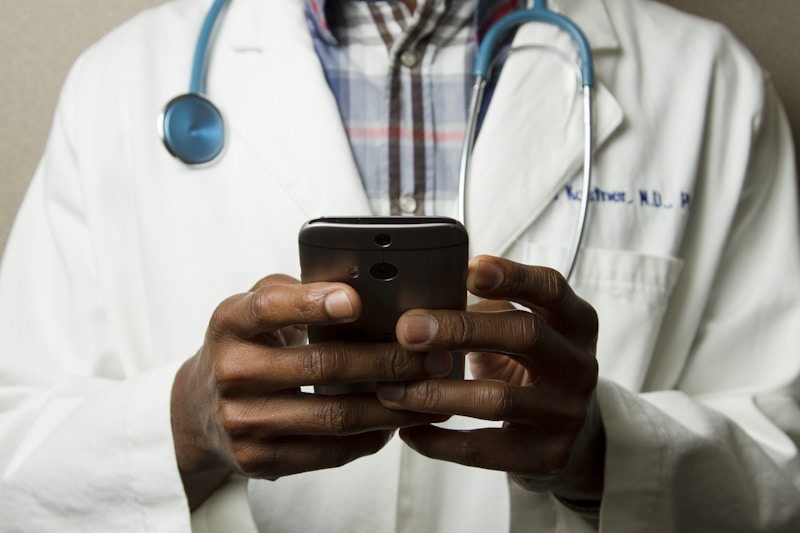
Photo: Unsplash — AI medical tools reduce documentation time from hours to minutes, giving doctors more time with patients.
1. Dragon Medical One: AI-Powered Clinical Dictation
Dragon Medical One (DMO) is the gold standard for medical speech recognition. It's not the same Dragon you used in 2015 — the cloud-based version uses deep learning trained specifically on medical vocabulary across 90+ specialties. It achieves 99% accuracy out of the box for most specialties because it understands medical context: it knows "MI" means myocardial infarction in a cardiology note but "mile" in a physical therapy note.
What makes it medical-grade: DMO integrates directly with Epic, Cerner, Meditech, and other major EHRs. You speak, and your words appear in the correct EHR field — no copy-pasting. It supports custom templates (SOAP notes, H&P, discharge summaries) and learns your speech patterns over time. Average documentation time drops from 12 minutes per patient to 4 minutes.
Pricing: ~$100/month per clinician. This sounds expensive until you calculate that saving 8 hours of documentation per week at a physician's hourly rate pays for itself within 2 days. Most hospitals deploy it enterprise-wide because the ROI is that clear.
2. UpToDate: Evidence-Based Clinical Decision Support
UpToDate is not traditional AI — it's a clinical decision support system used by 1.9 million clinicians worldwide. But in 2026, UpToDate has integrated AI-powered search and summarization that dramatically changes how doctors use it. Instead of searching for "hypertension treatment guidelines" and reading a 15-page monograph, you type "first-line HTN treatment for 55yo diabetic with CKD stage 3" and UpToDate returns a 3-paragraph evidence summary with grade-A recommendations, dosing, and contraindications — all with primary literature citations.
Why doctors trust it: Every recommendation in UpToDate links to the specific study, guideline, or meta-analysis it's based on. The AI doesn't generate information — it summarizes existing, vetted content written by 7,100+ physician authors. This is fundamentally different from ChatGPT, which sometimes invents studies that don't exist. In medicine, that distinction is everything.
3. Which One for Your Practice?
| Situation | Primary Tool | Why |
|---|---|---|
| Primary care, high patient volume | Dragon Medical One | Your bottleneck is documentation speed, not clinical knowledge |
| Specialist managing complex cases | UpToDate | Your bottleneck is staying current with rapidly changing guidelines |
| Hospitalist / Emergency Medicine | Both | You need fast documentation AND instant access to evidence |
| Resident / Fellow | UpToDate | Learning evidence-based practice habits early pays off for decades |
Our recommendation: If you can only pick one, choose based on your daily pain point. If you dread documentation, get Dragon Medical One. If you constantly look up guidelines, get UpToDate. If your institution already has an UpToDate subscription (most teaching hospitals do), add Dragon Medical One as your personal productivity tool.
4. Real Implementation: What Adoption Looks Like
These tools don't work if you don't use them consistently. Here's the adoption pattern from clinics that successfully integrated AI:
- Week 1-2: Use Dragon Medical One for 2 patients per day. Don't try to switch all your documentation at once. Focus on building the habit of dictating rather than typing.
- Week 3-4: Increase to 50% of patients. By now, you've trained the voice model to your speech patterns and medical vocabulary. Accuracy should be 98%+.
- Week 5+: Full adoption. Documentation time drops from 12 minutes to 3-4 minutes per patient. You're seeing patients on time and leaving work on time.
- For UpToDate: Replace your "I'll look that up later" habit with "let me check UpToDate right now." The AI summaries are fast enough to use during a patient encounter — 30 seconds for a medication interaction check, 60 seconds for a guideline update.
5. What These Tools Don't Replace
| AI Can Do | AI Cannot (and Should Not) Do |
|---|---|
| Transcribe your dictation with 99% accuracy | Make clinical decisions — that's your license, your judgment |
| Summarize 50 pages of guidelines into 3 paragraphs | Understand your patient's unique context, values, and preferences |
| Flag possible drug interactions | Weigh the risk/benefit of prescribing anyway (some interactions are acceptable) |
| Generate a differential diagnosis list | Take a patient history — the most important diagnostic tool is still the conversation |
Remember: These tools are called "clinical decision support" for a reason. They support your decisions. They don't make them. Any tool that claims to "diagnose patients with AI" is overpromising and should be viewed with extreme skepticism.